 |
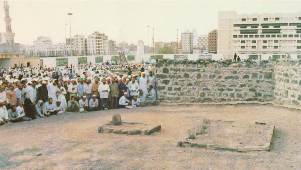
Name: Muhammed ibn 'Ali Titles: Al-Baqir Kuniya: Abu Ja'far Birth date: Tuesday, 1st Rajab, 57 A.H. in Madina Father: Imam 'Ali As-Sajjad (peace be upon him), 4th Holy Imam Mother: Fatema binte Hasan (daughter of Imam Hasan Al-Mujtaba) Martyred: Monday, 7th Zilhajj, 116 A.H. at age 59 years Buried: Jannatul Baqi |
The Fifth Imam (as) played a significant role in the development of early Islam. He (as) is respected as a great scholar amongst all the traditions within Islam and even those who did not believe in Imamah looked to him(as) for explanation of fiqh.

Some of the key theological issues that the Imam (as) dealt with were the nature of: iman, taqiyya, qada wa qadar and tawhid. Much of how we now understand the nature of Imamah was articulated by Imam al-Baqir (as) who explained the Quran and hadith basis of Imamah as well as its theological underpinnings.
Within the Shi'a community the Imam (as) had various rivals. Some of these, such as Zayd, are still remembered today, whereas others such as the Kaysaniyya have been more or less forgotten. In addition the Imam (as) had to deal with the perennial problem of the ghulats.
The clearest explanation of the teachings of Imam al-Baqir (as) as well as the theological/historical context of his (as) life is 'Early Shi'i Thought' by Arzina R. Lalani. Perhaps the best way to remember this Imam (as), indeed all of the Imams (as), is, rather than listen to a list of miracles the Imam (as) may have performed, to read up on the actual guidance the Imam (as) freely gave to all Muslims, indeed to anyone who asked.
The Imam (a.s.) has said:
Submitted by Steven Davies